




Who pays for slop?
We haven’t just outsourced our thinking. We’ve outsourced our responsibility.
We want better results for less money. And we want them now. But cost doesn't go away. It gets moved.
Packaging a product in plastic saves pennies per unit. The cost lands long after the sale, in a landfill. Website copy written for SEO makes reading a chore. Users bounce. A logo bought from a template seems like a steal—until the brand has to be rebuilt. Marketing a brand before defining the strategy is the most expensive way to be forgotten.
Cost doesn't go away. It gets moved.
It’s not surprising how we’ve arrived here. It’s a very human problem. We like comfort, easy calories, fast money. We’ve spent decades removing friction from daily life. When we’re cold, we turn up the heat. When we’re hot, we turn on the air conditioner. When we’re hungry, we open the fridge. We no longer need to find our way. Smartphones have erased boredom. Each one of these inventions is delightful. Together, they've created a pattern: we’ve lost the tolerance for discomfort. Thinking included. When the thinking gets hard, we find another way.
Enter AI.
AI is a great tool—and it feels easy. It removed that last bit of friction. Remember how hard coming up with a first draft used to be? Intuiting insights, making connections, surfacing tacit knowledge, creating an outline, structuring arguments... AI can spit it out within minutes. But at what cost? Each one of these steps is training.
We’re busy. We’re tired. Deferring hard tasks to AI makes our day easier. But the cost doesn’t disappear. It gets moved—and it compounds.
What easy costs us
In 1976, Langer and Rodin gave nursing home residents more responsibility and a plant to look after. Within weeks they were more alert and engaged than residents who were told the staff would handle everything. In deferring the cost of hard thinking to AI, are we giving up that responsibility voluntarily?
Daniel Kahneman identifies a natural tension in our thinking as System 1 and System 2. System 1 is fast, easy, impulsive and always on. System 2 is hard, slow and uncomfortable and takes effort to activate. These separate thinking strategies make sense. We wouldn’t get much done if we had to think deeply about everything we did.
But as the parable goes, the wolf you feed is the one that gets stronger. The more we allow System 1 to take the lead, the harder it becomes to activate System 2.
That doesn't mean everything has to be hard indefinitely. It is possible to turn a difficult skill into a fast and intuitive reaction. This is mastery. And the only way to get there is through practice. A lot of it.
Take chess. At first, every bit of energy is spent remembering what each piece does as you decide which one to move. The more you play, the more the rules become second nature. Once the rules are automatic, you can tackle strategy. And if you keep practicing, eventually the rules and the strategy become so ingrained, you'll see where the game will be many moves ahead. In his book The Art of Learning, chess prodigy Josh Waitzkin calls this “form to leave form.”
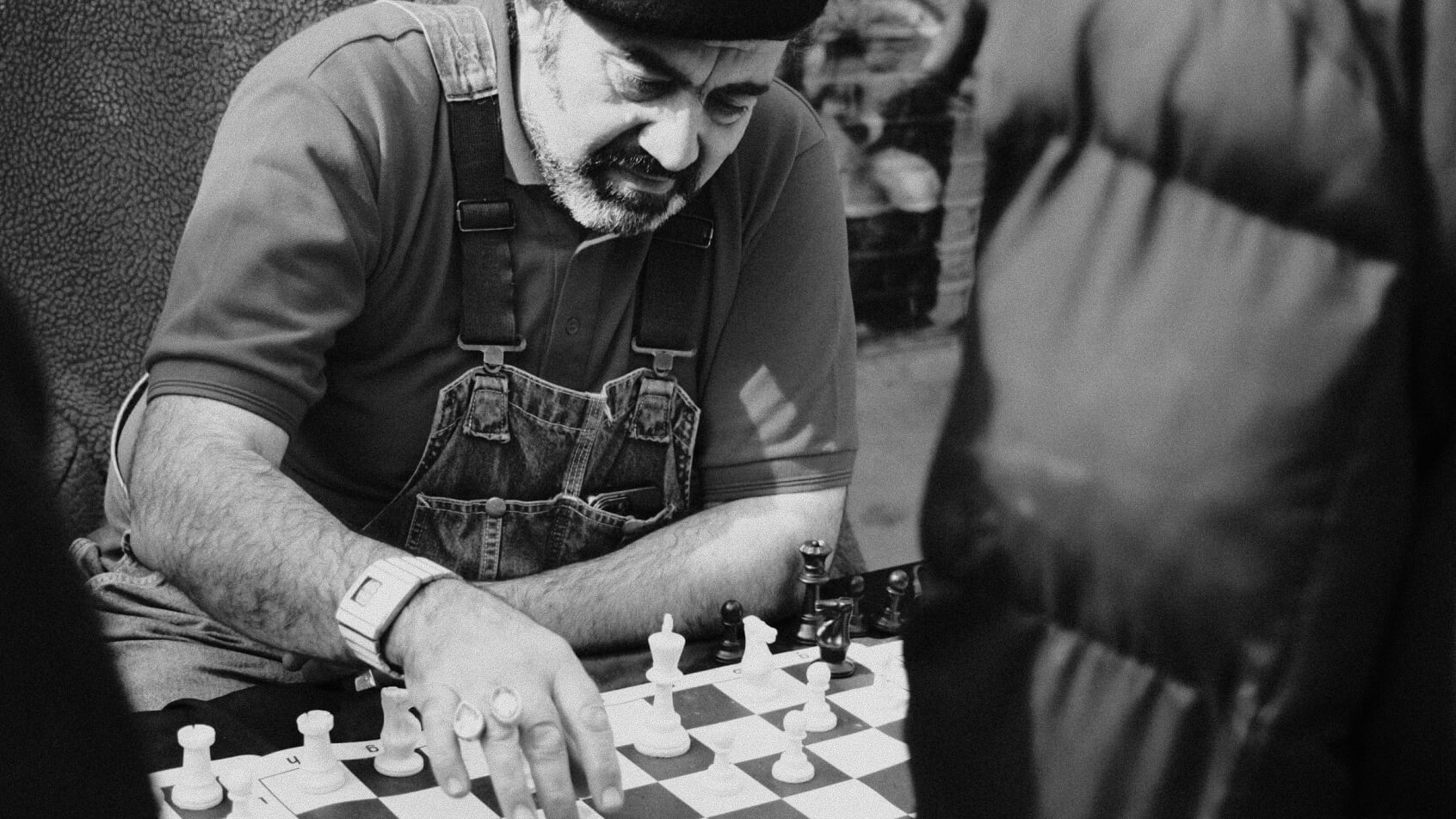
Kahneman notes a story we’ve all heard: “the chess master who walks past a street game and announces, ‘White mates in three,’ without stopping.” This isn’t magic. It’s practice that has become automatic.
Failure is a critical part of that process. It takes making bad work to learn how we can make it better. As we practice our craft, our knowledge compounds. We can focus on creating instead of on how to create.
It may feel productive to knock out a full brand identity in a day. But by glossing over the hard parts, we rob ourselves of the chance to achieve mastery. Every step presents a choice: which wolf will you feed? We can sharpen or dull our thinking. The trap is believing we're making that decision behind closed doors. No one will know. But the cost will show up eventually, when it matters.
A designer asked to defend her decisions after presenting an upchuck of AI slop will stop short. Discernment comes from a history of doing the work.
And if you choose to hand off the task, you can't hand off the responsibility. An architect who relies on AI to check for mistakes is still held accountable if a building collapses.
Every step presents a choice: which wolf will you feed?
We aren't bad people. We’re just so focused on building faster and cheaper, we’ve lost sight of a deeper question.
What are you becoming?
Your thinking is going to compound either way. The only question is which direction.
If we decide that speed and comfort are worth more than the cost, we will create slop—regardless of the tool we use. AI did not create that decision. It just made it cheaper.
Sources
Kahneman, Daniel. 2011. Thinking, Fast and Slow. Penguin Books, 2012 edition. Quoted passage on p. 11.
Langer, Ellen J., and Judith Rodin. 1976. “The Effects of Choice and Enhanced Personal Responsibility for the Aged: A Field Experiment in an Institutional Setting.” Journal of Personality and Social Psychology 34 (2): 191–98. Abstract on PubMed
Waitzkin, Josh. 2007. The Art of Learning: An Inner Journey to Optimal Performance. Free Press.